
A lean team running mobile home parks rarely loses money in one big mistake. It loses it in small leaks: a late fee nobody entered, a rent increase that never took effect, a check that never cleared. Each is easy to miss when the same few people are also paying bills and answering the phone.
We were brought in to improve this team's operating efficiency, and we expected to save hours. What we didn't expect was how quickly the work would pay for itself.
Saving the Hours First
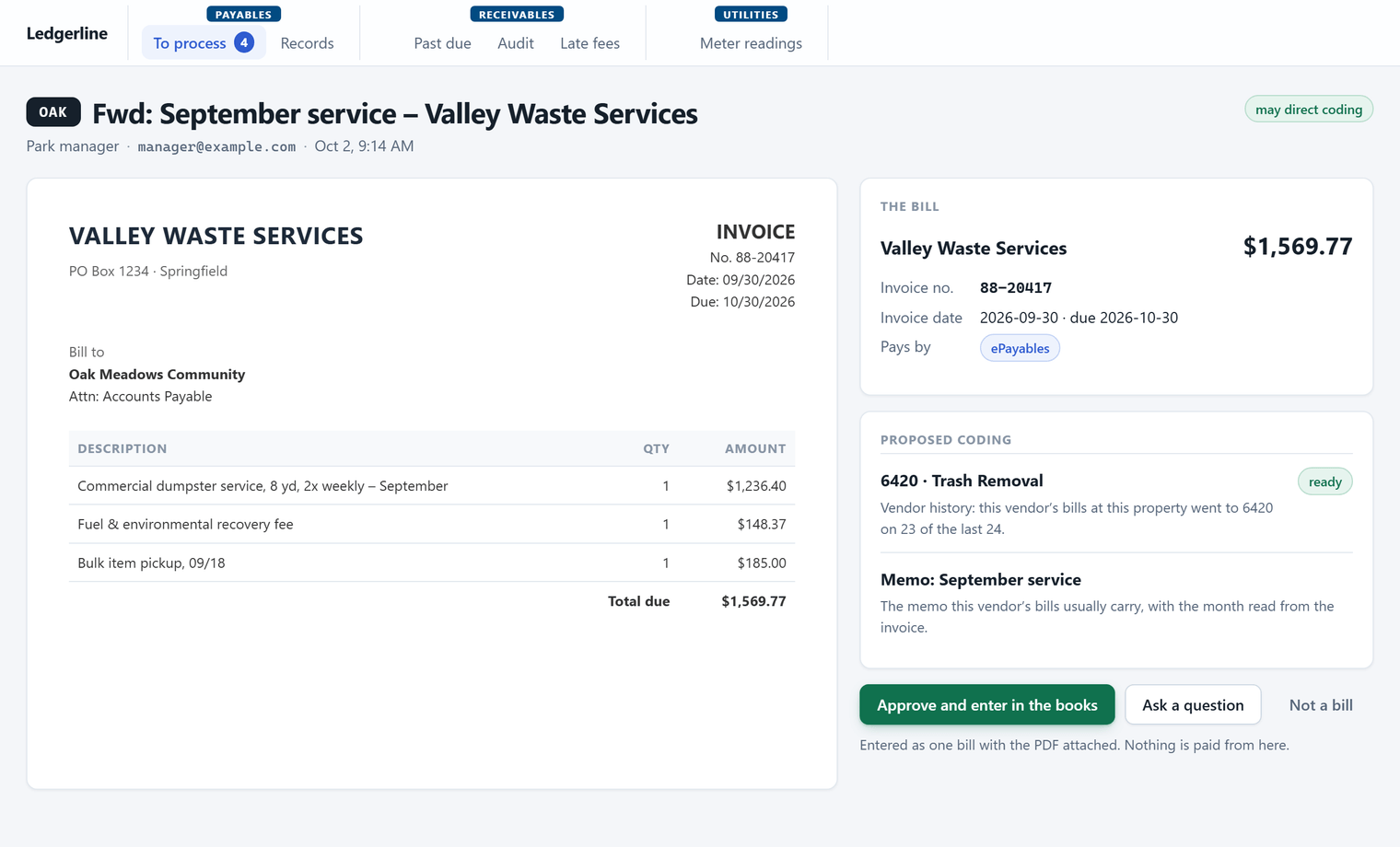
Ledgerline started as a way out of the shared inbox. Invoices from the field are read, matched to their property and vendor, and proposed with a coding. A person approves each one before it reaches the books. That gave the team back hours every week. The bigger surprise was what the same data revealed.
Where the Money Was Hiding
Once the ledgers were read every day instead of every month, the gaps showed up.
- Collections: Past-due balances surface daily, with notes on every account, so follow-up happens while a balance is still small.
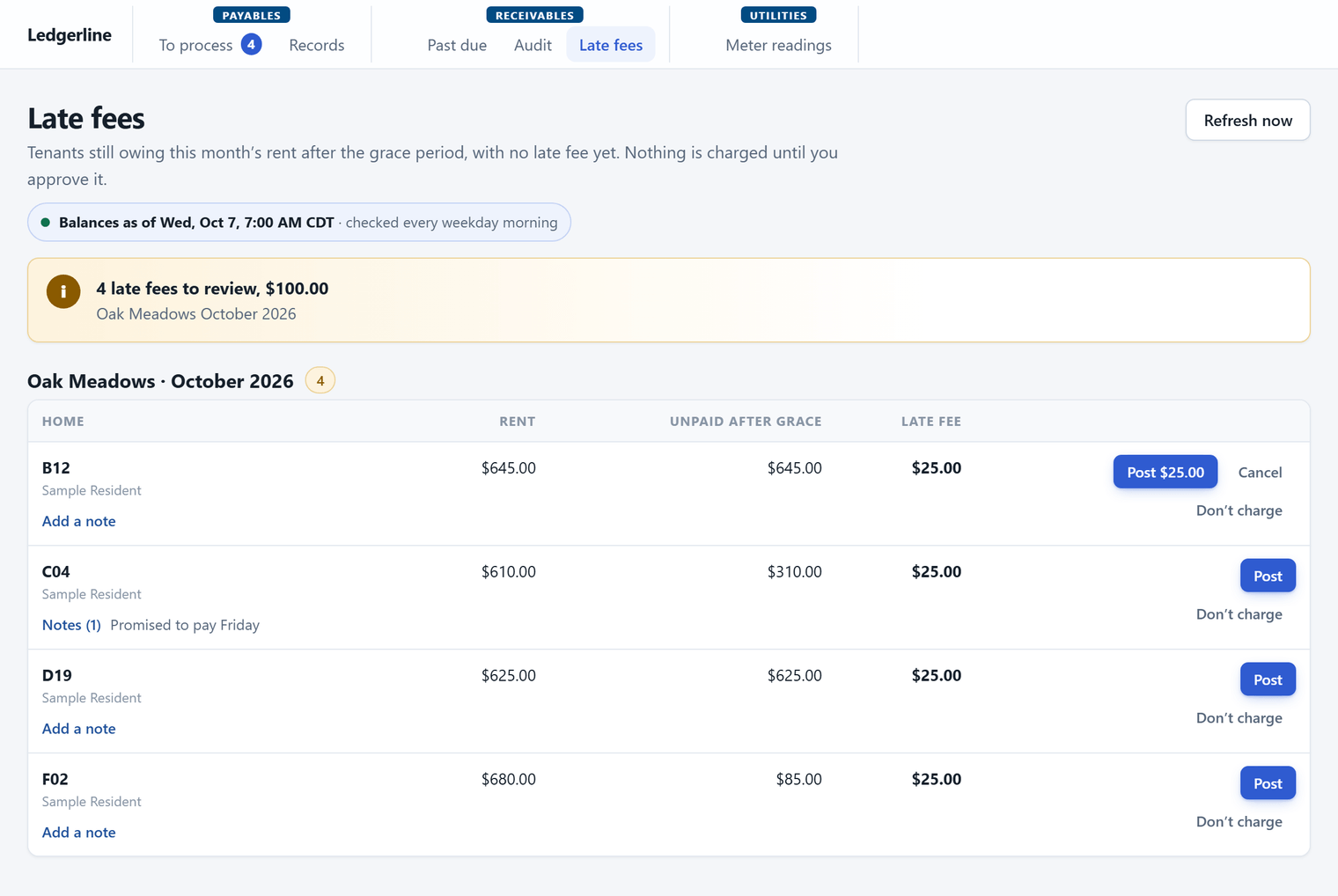
- Missed late fees: At one park, late fees were entered by hand. One month brought 6 where a typical month had 14 to 21. Ledgerline now proposes every fee that is due, and a person posts it with one click.
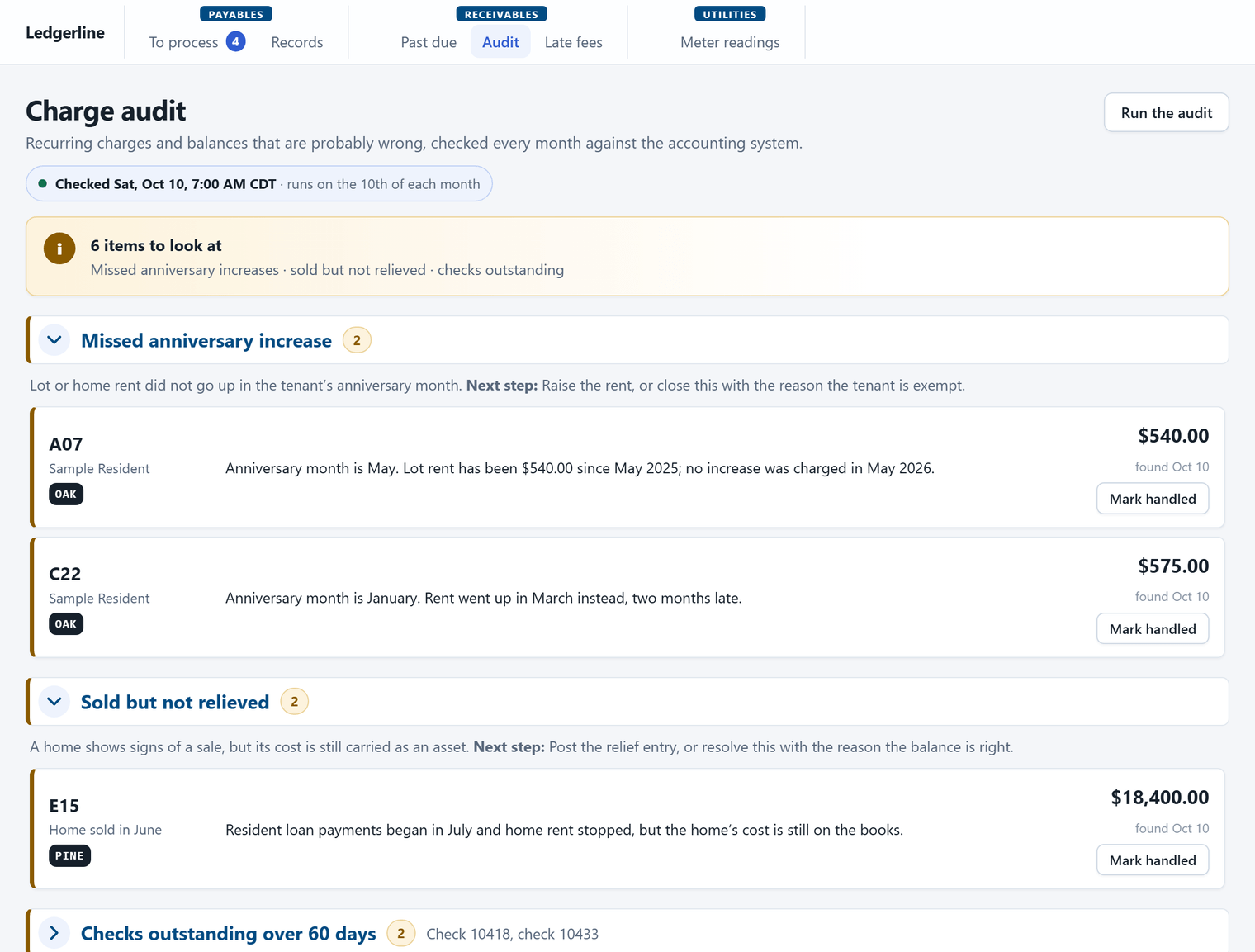
- Missed rent increases: Each resident's anniversary month is checked against the rent actually charged. Increases that should have happened, but didn't, are flagged for review.
- Ledger errors: Homes sold but still carried on the books, checks outstanding for months, early-payment credits missed or given in error. A monthly audit puts each one in front of a person instead of waiting for year-end.
Rules We Don't Bend
A person approves everything that touches the books, and Ledgerline never moves money. When it can't tell, it flags instead of guessing.
The Takeaway: Efficiency That Shows Up in NOI
Saved hours are welcome. Recovered revenue is what changes the numbers. The best back office doesn't just cost less; it finds the money you didn't know you were missing.